QC
--
waves

Case study

Cap Tourmente National Wildlife Area

Date: 23 May 2025

Location: Cap-Tourmente, Québec, Canada

Product: Commercial, community, municipal

CommercialCommercial, community, municipal

Client: Parks Canada
Date of installation: 2023
Flow: 22,200 L/day
Technology: Azimuth + UV disinfection

Context

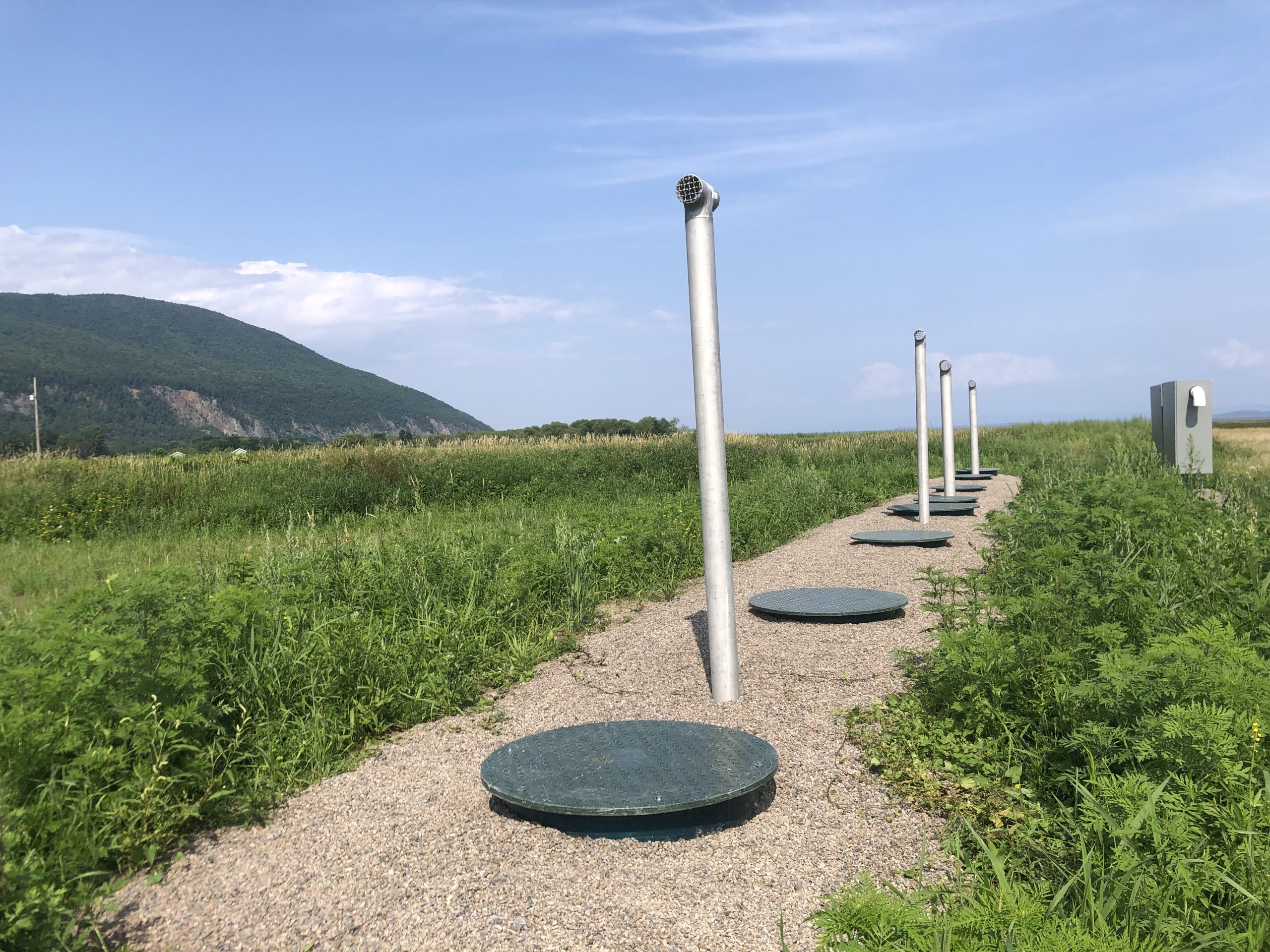
The Cap Tourmente National Wildlife Area, a remarkable natural site and a popular stopover for thousands of snow geese, needed to upgrade its wastewater treatment plant. The existing installation—an unaerated lagoon with an infiltration field—no longer met environmental standards or operational needs linked to increased visitor traffic.

Parks Canada was seeking a discreet, durable solution tailored to the sensitive realities of a protected site, while minimizing the impact of the work on surrounding wildlife and vegetation.

Design Data

Average Flow Capacity Attendance
22.2 m³/day Up to 2,000 visitors per day Peak during migration period

Installed Treatment Train

  • 1 septic tank

  • 1 biological reactor

  • UV disinfection system

  • Technical enclosures

  • Fully gravity-fed treatment line – no pumping required

Project Challenges

  • Ultra-sensitive environment (wetlands, protected species, nesting areas)

  • Limited access for heavy machinery → selection of lightweight fiberglass tanks

  • Restricted on-site operations → robust, low-maintenance system required

  • Work within a federal park → strict compliance with intervention standards

Client Benefits

  • High treatment performance, meeting federal requirements

  • No pumping system, ensuring greater reliability and reduced maintenance costs

  • Environmentally friendly: discreet, low-impact installation

  • Simple operation, ideal for a small technical team

Why the Azimuth Technology?

Azimuth technology was selected for its ability to integrate seamlessly into natural environments without disrupting the ecosystem, while delivering superior treatment quality. Its gravity-fed operation, with no intermediate mechanical components, makes it an ideal solution for remote or ecologically sensitive sites.

Results

Since its commissioning in March 2023, the system has been operating optimally, even during peak visitation periods. Effluent quality consistently meets discharge standards, all with minimal human intervention.


Case studies

Would you like to know more about this post? Get in touch with us

Case studies

Next studies

This site uses cookies to ensure its proper functioning, improve performance, analyze use, personalize content and offers and then display targeted advertisements based on the information you have provided or that they have collected on social networks and other third-party sites. These cookies cannot be refused.

Read more